
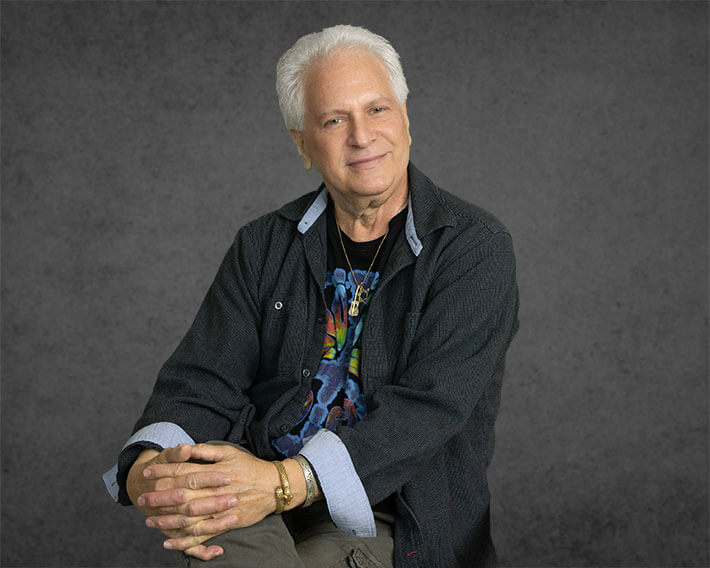
Jonelle Klein’s interview with Scott:
Question: Tell us a little bit about what you’ve done in your career and what you’re doing now in Sedona.
Scott: I grew up in Munster, Indiana, in the northern part of the state. My parents had a piano in the house, and by the time I was eight years old, I was taking piano lessons, along with elocution, ballet, and even equestrian training. My mother probably had a very different vision for my future than the one I ultimately chose. I come from a family full of doctors—my brother and his wife are both in the mental health field—but I realized early on that path wasn’t for me.
After leaving Indiana University, I went into the music business. While at IU, I met a number of talented musicians, including John Mellencamp and others connected to the music school. I began managing musicians in Bloomington, many of whom were students or graduates of the program. That experience became my entry point into the industry.
Eventually, I moved to New York City, bringing several of those artists with me as clients. I started booking tours and working with major recording artists. It didn’t take long for me to realize that while I loved music, I wasn’t meant to be a performer. I can play five instruments, but I’m not a master of any. What I am good at is business, and I found my place managing artists and helping build their careers.
Question: How did your career develop from there?
Scott: I stayed in New York until I was about 39 years old. During that time, I worked at a high level in the music industry and partnered with people like Paul Fishkin and Joey Grossman. Together, we built a company called Maven Management, later known as Maven National Artists. We had offices in New York, Woodstock, and Los Angeles.
When I got married, I moved back to Indianapolis. My wife was a sports and entertainment agent who represented major individuals like Jackie Robinson and Fred Astaire. We had a daughter, and life was going well until my wife became ill and passed away from cancer. That was a turning point for me.
I relocated to Pacific Palisades with my daughter, where we lived for about ten years. I continued working in music during that time. Later, I moved to Palm Beach to care for my father. After he passed away, I found myself asking a familiar question: where do I go next?
Question: So how did Sedona enter the picture?
Scott: Sedona had always been in the back of my mind. I spent my freshman year at Arizona State University, and during that time I would ride my motorcycle up to Sedona. Back then, it was much more of a ranch town—very different from what it is today. I remember thinking even then that I would come back someday.
So after Palm Beach, instead of returning to Los Angeles or New York, I decided to take a different path. I got in my car, drove to Sedona, and rented a house sight unseen. I eventually bought that home and made it my own. It was a conscious decision to step away from the intensity of the major markets and build a life here.
Question: How are you still connected to the music world while living in Sedona?
Scott: Even though I’m geographically removed, I’ve stayed deeply connected to the music industry. Over the years, I’ve built relationships that continue to bring opportunities my way. One of the interesting things about living in Sedona is that people love to visit. Friends, colleagues, and artists come through, and that creates a natural bridge between my past career and my current life.
For example, a musician I worked with years ago, Randy Jackson—not the one from American Idol—came to Sedona to perform. I helped organize the event and brought in a full audience. He ended up staying at my house for two weeks while touring around Arizona. I even stepped back into a management role during that time.
Question: When people come to visit you in Sedona, where do you take them?
Scott: I usually give them a mix of well-known and lesser-known experiences. I always recommend West Fork and the ruins in Boynton Canyon, i There are also trails like the Loy Canyon Trail that offer incredible scenery without the heavy crowds.
I tend to steer people away from the more crowded spots like Devil’s Bridge and Bell Rock. Personally, I enjoy exploring quieter areas, sometimes even finding my own paths while being respectful of the environment. Around my home, there are also some beautiful trails that I like to share with guests.
Question: What about dining? Where do you like to take visitors to eat?
Scott: For dining, I usually recommend restaurants associated with Lisa Dahl. She’s a close friend, and her restaurants really capture the essence of Sedona’s culinary scene. Whether it’s Mariposa, Cucina Rustica, or Butterfly Burger, you’re going to have a great experience.
Question: Who are some people in the Sedona community you admire or enjoy working with?
Scott: There are quite a few. I have a lot of respect for people who contribute meaningfully to the community. I’ve also worked with individuals connected to the performing arts center, bringing in speakers, writers, and industry professionals for workshops and events.
Question: What do you do for fun in Sedona?
Scott: Hiking is a big part of my daily life. I hike every single day, usually between four and seven miles. It’s almost like a form of meditation for me. I believe it’s one of the reasons I’ve been able to stay active and healthy.
Beyond that, I enjoy spending time with friends, especially when they come to visit. Sedona has a way of bringing people together, and I try to make the most of that.
Question: What would you say is your contribution to the Sedona community?
Scott: I think my contribution is really about connection—bringing people, ideas, and creative energy together. I’ve spent my entire career building relationships in the music and entertainment industries, and now I have the opportunity to channel that into Sedona.
I see potential here for growth in the arts, particularly in music. I’m someone who believes in the future, not just for myself but for the next generation. My daughter is part of that future, and I think about what Sedona can become for her and for others.
There’s something about this place that inspires creativity. I’ve had artists come here and say that Sedona itself feels like it’s making the music before they even begin to play. That energy is real, and I think it’s something special that can continue to grow.
Question: How would you describe Sedona in one thought?
Scott: Sedona makes the music before we even start playing.


