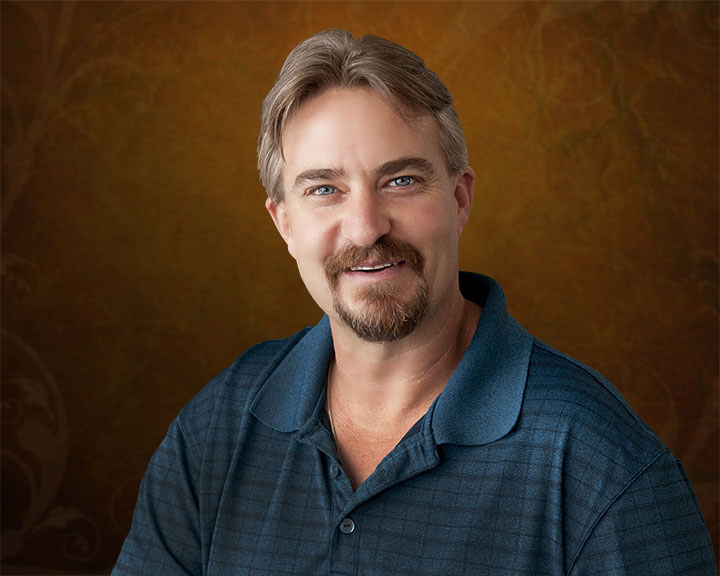
Meet Damien Browning.
Q: Tell us a little bit about what you do in Sedona.
A: I own and operate an addiction recovery center that is based in Cottonwood, called Steps To Recovery Homes. It services people struggling with addiction and co-occurring disorders from all over Sedona and the Verde Valley. For eleven years, we’ve been able to bring in people who have no money and assist them in getting their lives back by providing them with the tools, guidance, encouragement and empowerment to change their lives. We also offer a job development program. I am a former addict myself, having been in heavy addiction for nineteen years and now approaching my eighteenth year of sobriety. I have been through this process personally; from incarceration, fighting for guardianship over my kids, to earning a degree, excelling in college and starting this non-profit, I feel that if I can turn my life around, anyone can.
Q: What brought you to the Verde Valley?
A: I moved to Cornville in 1992. My grandparents lived here and I was raised by them after my parents left. At that time, I had just graduated high school but was struggling with addiction. I’m originally from Joshua Creek, CA and I came here to turn my life around, but life doesn’t always go as we plan.
Q: Do you have just one recovery house, or do you have multiple locations?
A: We have two, we have one structured sober living house that accommodates 12 individuals, and one transitional living house that accommodates eight.
Q: How does someone get into the recovery home?
A: They contact us with willingness. Over the last 11 years, we’ve served 500 people, with more than half still in long-term recovery. Our reputation is strong, and most of our business is word-of-mouth. The Department of Corrections, probation departments, jails, and other treatment facilities—both in-and-out of state—send us people. We get referrals from across the United States, including California, Texas, and Maine. We take a holistic approach that separates us from other facilities. We’re working to raise more money to increase our online advertising because we have a very specific and unique program that draws a lot of social media inquiries as well.
Q: How many people work for you?
A: Eighteen.
Q: Do you provide food?
A: No, we are an outpatient facility, so people have to provide their own food. We are what’s known as being a part of a “step-down” process: people typically come to us after an inpatient facility. We also help people outside of our facility, within the community. The process for someone seeking help with addiction, is generally to start with a detox, then moving to an inpatient facility, and then moving to an outpatient facility to continue the success of their recovery.
Q: You’re a not-for-profit organization. How do you raise money?
A: We raise money through sponsorship and tax donations, fundraising, and government loans and grants. When we established our nonprofit, we created an annual sponsorship program and asked for donations which helped us to launch. Our sponsorship levels range anywhere between $100-$2500. We also became eligible and qualified as a charitable organization through the State of Arizona, which enables people to choose to donate their state taxes to us. In addition to our sponsors and tax donations, we host an annual fundraising dinner called Dinner for Hope, and opened a resale store called Miracles Happen Resale Store which also contributes to our funding. We host a variety of other fundraising activities throughout the year, but most recently we acquired a USDA loan that helped us purchase a building used for our new outpatient treatment center, named the Connect Wellness Center. The center provides skills-training for individuals in recovery, including life skills, goal-setting, physical fitness, and nutrition to help them integrate into functional lifestyles. I continue to apply for grants, solicit donations, and take on extra work to expand the business.
Q: What do you do for fun?
A:I love going to concerts and listening to music, fishing, and watching comedy. I’ve also started to travel more. I’ve been making an effort to travel 2-3 times a year and I love it. I enjoy looking at architecture; I recently went to New York for the first time. I’m making more time for these experiences.
Q: What do you do with your kids?
A: My kids are all grown and out of the house. They are 26, 21, and 20. They’re really great kids and very productive. They each have a girlfriend, hold jobs, and have their own cars. I’ve broken the cycle of addiction in their lives, and I feel so blessed.
Q: Who’s the most interesting person you’ve met while you’ve been in Verde Valley or Cottonwood?
A: I’d have to say John Solenberg. I remember speaking with him about his service work, which really impressed me. We also share a birthday, and talk now and then. Because I am dedicated to helping others, hearing about the service work he’s done has inspired me to do more.
Q: Do you have a favorite restaurant in the Verde Valley? Is there anything special you enjoy?
A: I particularly like Pizzeria Bocce, it’s one of my favorites. I’ve also been starting to cook more of my own meals and I really enjoy it.
Q: Is there anything else you would like someone to know about you?
A: Just some insights I’ve taken away from my journey: that connection is the opposite of addiction. And that our perception is the foundation of the present moment. And all we have is the present moment. We’re so focused on consumerism and materialism, but none of that will matter when we die. To the people I mentor I often say, “it’s your decision to choose what to do between now and when you die. What will you do?” For a long time, I didn’t believe that I had a purpose. I believe that empowering people to find their purpose could change our world.