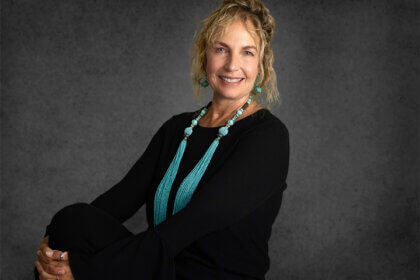
Meet Catherine Beers. An Officer of the Sedona Police Department
Q: What inspired you to do what you do?
A: I was in the food business. I moved to Sedona in 2004; I was 25 years old at that time. I had quit college back east. When I moved here, I thought that I would become a massage therapist, get state-licensed and nationally certified, and I would have a title and be something. I completed massage school. In the meantime, I got a job at the Cowboy Club, and I was a hostess, then supervisor, front-of-the-house manager, and then director of hospitality. When the economy changed in 2008, things shifted. My position was eliminated. I became the assistant GM at the Wildflower Bread Company from 2011 until 2017. When I was 37, I realized that I wasn’t doing anything impactful or effective because life is about being influential and changing the ripple effects of what we can become. My friend, Stephanie Foley, asked me what my interests were, and she’s like, girl, What about being a cop? It never crossed my mind. Sedona wasn’t hiring officers for a long time. I continued to ride along and not let them forget about me. And then, I had applied for a dispatch position. I dispatched for only about seven months, and then they had an officer’s spot open. I became an officer when I turned 40. In the academy, everybody else is 22 or 23 years old. I lived in the dorms for five months at the college with the kids. I graduated from the academy and became a sworn police officer on May 23rd, 2019. So just this past May 23rd, I celebrated two years as a Sworn Police Officer.
Q: Could you tell us about the Vagrant that lives in Sedona?
A: Richard Rosa, he’s 76 years old, and he’s been in Sedona for years. He was difficult and many officers have had many experiences with him. He has been arrested several times for fighting. When I became an officer, he had lost vision in his right eye and was blind. My contact with him was different because he became humbled by his blindness and needed people. He had no family here and was homeless for at least ten years. I made contact with him in the tunnel below Walgreens for a long time. I would bring him some food, and I would listen. He’s very educated, listens to podcasts, and I could have an intelligent conversation with him. Most people wouldn’t expect that because nobody talked to him. I asked Sergeant Stevens to help, locating random phone numbers through the system, numbers and addresses would come up that may be associated in some way. So I just started calling these numbers, asking if they know Richard Rosa. Sometimes people would hang up, and then, I got to one gentleman who responded, is he dead? I said, no, he’s not dead. And he’s like, well, who is this? I told him that I knew this gentleman and that we were friends for several years, and I’m looking for family members. He replied that he’s my wife’s brother. So the wife gets on the phone, and she tells me that they haven’t seen him in over 20 years, maybe 25 years. They also have a younger brother. They came from Reno and picked him up last week.
Q: Could you tell us about another event where you saved somebody’s life?
A: A 23-year-old man named Joshua – his birthday is February 24th – just like mine (which is weird). We got a call that was dispatched to fire with a location on Lower Loop Road – there was a young man passed out in a car and didn’t seem to be alive. People that stopped thought that it was a drug overdose. When I got there, he was in a recline position in the seat. Honestly, I thought he was dead. He looked like rubber and was white. I touched him, and he made a snoring noise, which is typical of that type. I opened the door, and I got him out of the car and on the ground. I wasn’t Narcan certified, but the responding officer was, and he administered the Narcan. We both received a lifesaving award because I pulled him out of the car and recognized what it was. In all honesty, we both played a part in it. He left by ambulance, and there was no arrest or anything. We don’t arrest people in those situations, especially if they get help. A couple of months later, his best friend, Dylan, overdosed on fentanyl, and he died. I was first on the scene. I went to his funeral, and they did this fabulous Lakota ceremony where they smudged and drummed. When it came time for people to stand up and speak about Dylan, only two people got up. I don’t know if it was an uncomfortable thing, but I got up and spoke because I’m in recovery, and I quit college to get sober.
Sometimes, I share my recovery with people because it gives me a leg up with saying – I get it. There’s a level of compassion with somebody that understands addiction that other people who aren’t addicts cannot understand. If it gives somebody a moment of clarity, even for just a second, to realize that I’m not shaming you. If there’s a tool or a resource that I can share with you right now that makes a difference, then that’s the impact I want to make. The transparency of that allows us to be influential, and that’s what we need right now. We need people who can see the law’s spirit, still follow the letter of the law, but realize that there’s a gray area.